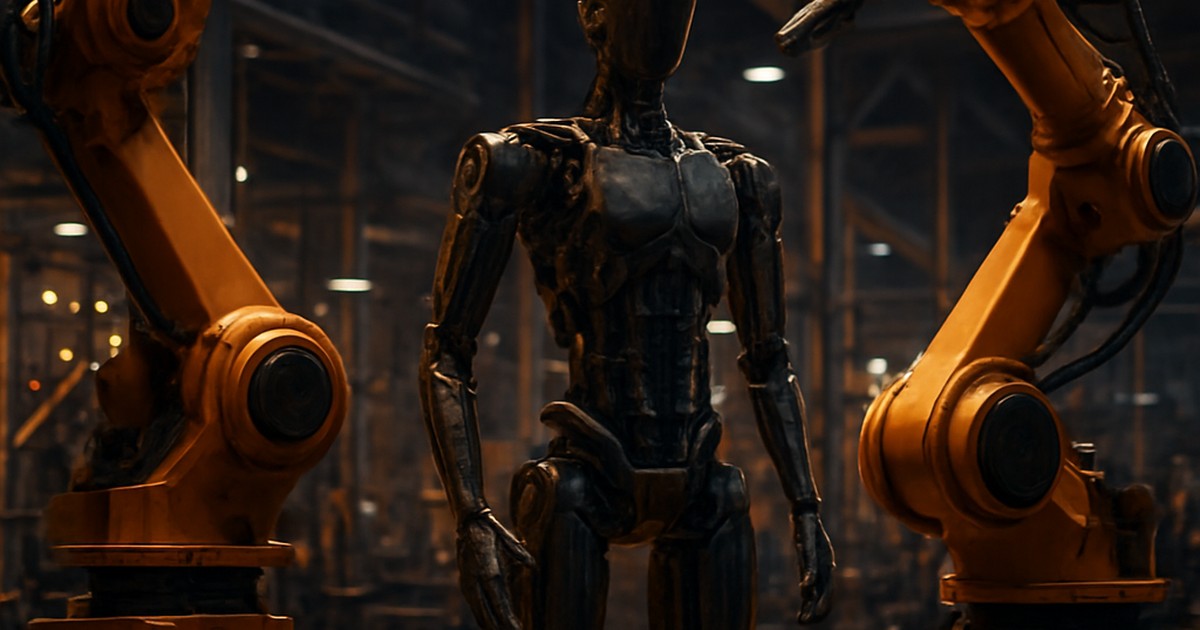

May 2026 marks a watershed moment in the humanoid robotics arena, transitioning from proof-of-concept prototypes to the dawn of scalable production. In this high-stakes race, corporate giants and rising innovators alike are turbocharging efforts to meet ambitious production targets that promise to redefine the market landscape. Tesla stands at the forefront with its audacious plan to produce between 50,000 and 100,000 units of its Optimus Gen 3 robots within the year. Meanwhile, Figure AI and 1X Technologies trail with more conservative figures, yet they are crucial players in this burgeoning field. This article delves into the specifics of these corporate strategies, exploring the implications of their aggressive production goals and what they mean for consumers, the market, and the broader robotics ecosystem.
Context
As the humanoid robotics industry makes its transition from development to production, it is crucial to understand the forces that have driven these advances. Over the past decade, advances in AI algorithms, materials science, and battery technology have converged to make humanoid robots not just a theoretical possibility but an impending reality. These technological leaps have been matched by significant financial investments, as seen in companies like Apptronik, which recently secured $520 million, valuing it at $5.5 billion. This financial backing underlines a broader confidence in the market’s potential.
The industry’s shift to production has been catalyzed by the proven capabilities of these robots in controlled environments. Figure AI’s BotQ serves as a vivid illustration, having demonstrated its efficacy in real-world industrial settings such as BMW’s Spartanburg and Leipzig plants. These deployments have validated the operational reliability of humanoid robots, making a compelling case for broader adoption. As these robots demonstrate their utility, the question has shifted: it is no longer about whether these robots can function as intended, but rather about how quickly they can be produced to meet market demand.

Strategically timed announcements from these companies aim to capture market attention and investment interest. Tesla’s decision to unveil its bold production targets follows its successful deployment and testing of the Optimus Gen 3’s enhanced capabilities, particularly its advanced autonomous stack and redesigned hands. This timing is no coincidence; it aligns with Tesla’s larger strategy to dominate the market by setting a high bar for both technology and volume production.
What Happened
Concrete production targets announced this month by key players like Tesla, Figure AI, and 1X Technologies signify a monumental shift in the humanoid robotics industry. Tesla’s aggressive target of 50,000 to 100,000 units for its Optimus Gen 3 robots underscores its strategy to leverage its well-established manufacturing prowess. Tesla’s vertically integrated approach, which shares component pools across its product lines, aims to drive down costs significantly. Elon Musk’s team has set a cost target of $20,000 to $30,000 per unit, a figure ambitious yet increasingly plausible in today’s advanced manufacturing environment.
Figure AI, although less aggressive than Tesla, plans to produce 12,000 units of its Figure 03 model. This figure, though modest by comparison, is rooted in already-validated deployments that have showcased Figure’s technological capabilities. By focusing on quality and reliability over sheer volume, Figure AI seeks to cement its reputation in industries requiring precise and dependable robotics solutions. The company’s partnership with BMW demonstrates its commitment to delivering proven, functional robots to the market.

1X Technologies, on the other hand, is making waves with its NEO Home robot, priced at $20,000. This consumer-focused strategy highlights an entry-level approach, with their Hayward, California facility ramping up production. 1X’s bold move to ship at this price point is part of a calculated risk to capture early market share and consumer trust. Meanwhile, Apptronik, collaborating with Jabil, aims to introduce the Apollo humanoid, reinforcing the dynamic landscape of emerging robotics solutions.
Why It Matters
The implications of this shift are profound, touching on multiple facets of modern industry and consumer life. For manufacturers, the shift to mass production of humanoid robots represents a potential revolution in labor dynamics. As these robots become more integrated into production lines, they promise to enhance efficiency and reduce dependency on human labor for repetitive and dangerous tasks. This has the potential to reshape the labor market, prompting a re-evaluation of the human role in manufacturing.
For consumers, the advent of affordable humanoid robots like 1X Technologies’ NEO model opens up new possibilities in domestic automation. These robots promise to become more commonplace in homes, assisting with tasks ranging from cleaning to security, and even companionship. The affordability of these robots, driven by reduced production costs, means that their adoption could mirror the rapid integration of smart home devices seen in recent years.
From a policy perspective, the scaling of humanoid robot production raises important questions about regulation and ethics. Governments will need to address issues related to privacy, security, and the ethical implications of robots in both public and private spaces. As these technologies become more prevalent, regulatory frameworks must evolve to ensure that their integration into society is both beneficial and safe.
How We Approached This
In analyzing this pivotal transition in the humanoid robotics industry, we leveraged a diverse array of sources, including company press releases, financial reports, and expert commentary in the field. Our focus was on understanding not just the numbers and projections but also the strategic intentions behind each company’s production announcements. By examining the broader implications of these developments, our goal was to provide a comprehensive overview that is both informative and insightful.
We opted to highlight Tesla’s strategic advantage due to its ambitious targets and significant market influence. However, we also paid close attention to the efforts of other players like Figure AI and 1X Technologies to provide a balanced view of the industry’s landscape. This approach ensures that our readers gain a nuanced understanding of the competitive dynamics at play and the potential impacts on the market.
Frequently Asked Questions
What sets Tesla’s Optimus Gen 3 apart from other robots?
Tesla’s Optimus Gen 3 distinguishes itself through its advanced autonomous stack and newly designed hands, which enhance its dexterity and operational efficiency. The company’s vertical integration strategy allows for cost-effective production, making it a formidable player in the race to scale humanoid robotics.
How is the cost structure of humanoid robots changing?
The production cost of humanoid robots has significantly decreased from $200,000-$500,000 to under $50,000, facilitated by advancements in technology and shared components. Tesla aims to reduce these costs further to $20,000-$30,000, setting a new industry standard for affordability and scalability.
What are the ethical considerations in deploying humanoid robots?
As humanoid robots become more prevalent, ethical considerations such as privacy, security, and societal impact must be addressed. Regulatory frameworks will need to evolve to safeguard individual rights while ensuring the beneficial integration of these technologies into everyday life.
As we look towards the future, the humanoid robotics industry stands on the cusp of transformation, driven by rapid advancements and strategic production scaling. Tesla’s ambitious targets set a formidable industry benchmark, likely propelling further innovation and competition. As production capabilities expand and costs decrease, humanoid robots are poised to become an integral part of both industrial and domestic environments. However, as this shift unfolds, it will be crucial to monitor the regulatory and ethical landscapes to ensure these groundbreaking technologies enhance rather than disrupt societal norms.