This week marks a remarkable dual advancement in the realm of physical AI, with Unitree Robotics and NVIDIA spearheading significant innovations. On one hand, Unitree Robotics has set a new benchmark in humanoid robot sprinting capabilities, with their H1 model clocking speeds of up to 10 meters per second. This achievement not only places the H1 on par with some of the fastest human sprinters but also positions Unitree as a formidable contender in the upcoming Beijing humanoid half-marathon. On the other hand, NVIDIA has expanded the horizons of robotic manipulation with the launch of Newton 1.0, an open-source physics engine that promises unprecedented simulation efficiency and accuracy. Newton 1.0 is tailored to overcome existing limitations in real-time physics engines, offering features such as GPU-accelerated parallel simulation and robust collision detection that are crucial for developing next-generation robotic systems. This article delves into these pioneering developments, exploring their implications and potential to reshape the landscape of robotics in the years to come.
Context
Unitree Robotics, founded in 2016, has steadily gained recognition as a leader in the field of agile robotics. Their dedication to pushing the limits of robot mobility is exemplified by the H1, which now holds the record for humanoid sprint speed. This achievement is not just a technical milestone; it positions Unitree strategically within the competitive arena of robotics events, particularly as the Beijing humanoid half-marathon approaches. This race, a hallmark event for robotics enthusiasts and developers, provides a platform for showcasing advancements in humanoid robot design and function.
Simultaneously, NVIDIA’s ventures into the field of AI and robotics have been transformative, with their focus on high-performance computing and graphics rendering now extending into the realm of physical simulation. NVIDIA’s release of Newton 1.0 is a strategic move designed to address the growing demand for robust and scalable simulation tools. By making Newton 1.0 open-source and integrating it with NVIDIA’s existing Isaac Sim platform, the company aims to democratize access to high-fidelity simulation, thereby enabling a broader spectrum of researchers and developers to innovate without the constraints of costly proprietary solutions.
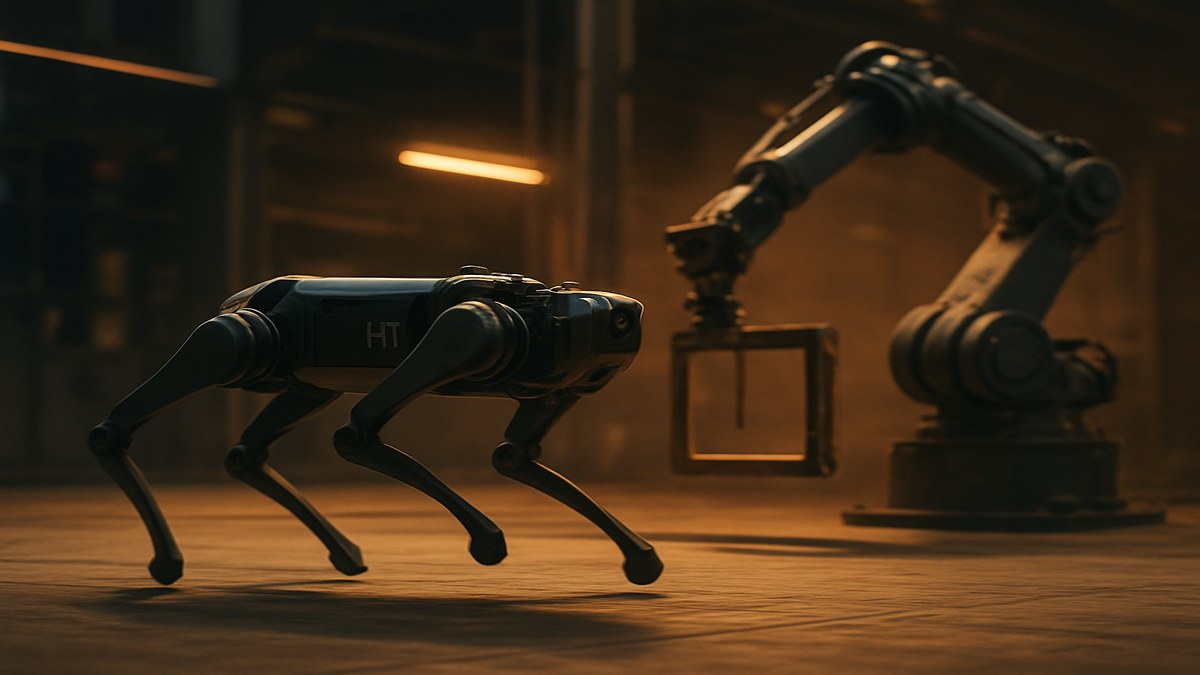
The convergence of these two developments — Unitree’s record-setting H1 and NVIDIA’s Newton 1.0 — represents a pivotal moment in the evolution of robot design and functionality. Both milestones underscore a broader trend in the industry: the shift towards more sophisticated, agile, and capable robotic systems that can operate in complex environments. As these technologies mature, they promise to catalyze further innovation, potentially unlocking new applications and efficiencies across various sectors.
Unitree H1’s Record-Breaking Sprint
Unitree Robotics’ H1 humanoid robot achieved a groundbreaking sprint speed of 10 meters per second, a feat that took place on April 15, 2026. This achievement surpasses previous records and positions the H1 as one of the fastest humanoid robots in existence. The development of the H1 has been a project of immense focus for Unitree, involving cutting-edge advancements in materials science, actuator design, and control algorithms. The record was officially verified under standardized testing conditions, with the robot completing a 100-meter dash on a regulation track, observed by independent adjudicators.
The H1’s design incorporates lightweight materials and advanced motors, which contribute to its speed and agility. The robot’s control system employs sophisticated AI algorithms that allow it to maintain balance and adjust to different surfaces and inclines, emulating the adaptability of human sprinters. Unitree’s engineers have emphasized the role of machine learning in optimizing the H1’s performance, particularly in real-time adjustments that enhance its speed without compromising stability.
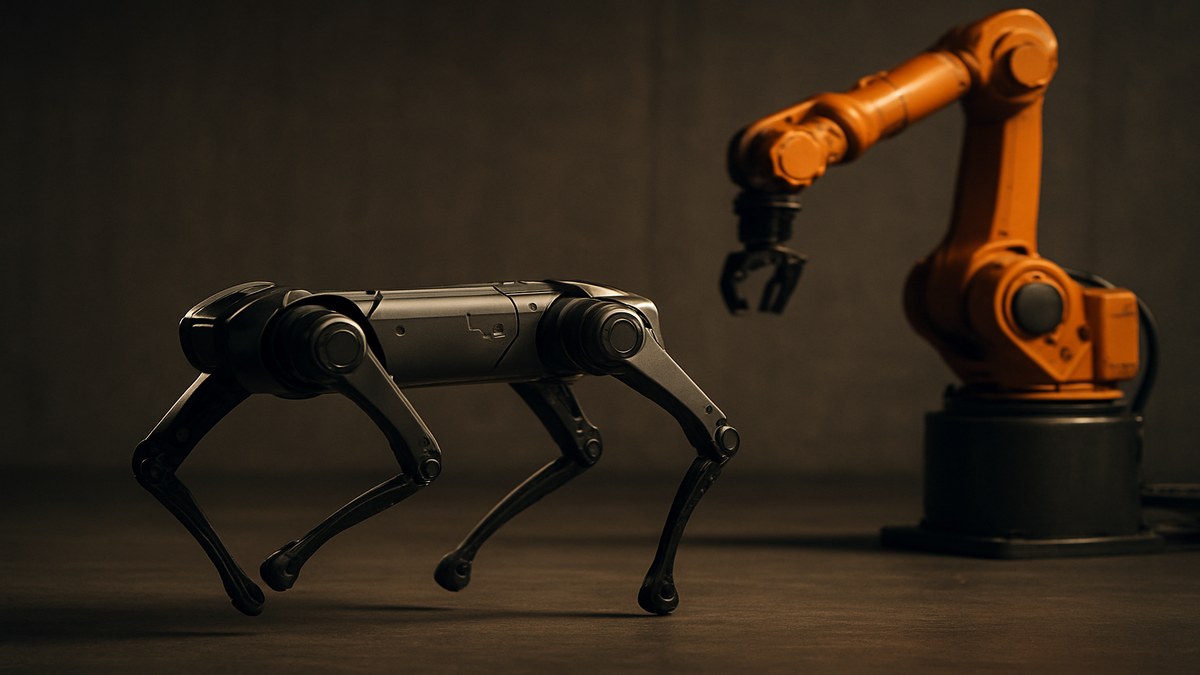
As the Beijing humanoid half-marathon looms, the spotlight is on Unitree to demonstrate the practical capabilities of the H1 in a competitive setting. The event, scheduled for April 22, 2026, will see numerous robotics firms vying for supremacy. The H1’s participation is eagerly anticipated, not only as a spectacle of engineering prowess but also as a measure of how such technologies can transition from controlled environments to more dynamic, real-world applications.
Why It Matters
The achievements of Unitree Robotics and NVIDIA signal significant implications for the future of robotics and artificial intelligence. For industries relying on robotic automation, such as manufacturing and logistics, advancements in humanoid robot speed and dexterity open doors to new levels of efficiency and precision. The H1’s capabilities suggest a future where robots can perform tasks in environments previously deemed too dynamic or complex, such as search and rescue operations or intricate assembly lines.
Moreover, NVIDIA’s Newton 1.0 physics engine presents a transformative tool for researchers and developers focused on robot manipulation. By offering a highly accurate simulation platform, it enables the development of more sophisticated AI algorithms, facilitating faster iteration cycles and reducing the time from prototyping to deployment. This democratization of access to high-fidelity simulation could spur innovation across academic institutions and startups, leveling the playing field for smaller entities to contribute to the field of robotics.
Furthermore, these technological advancements reflect a broader trend towards the integration of AI and robotics into everyday life. As robots become more capable, their potential applications expand into areas such as healthcare, where they could assist in surgical procedures, and in domestic settings, where they could perform household tasks. The progress showcased by Unitree and NVIDIA indicates a future where robotics plays an increasingly integral role in society, enhancing human capabilities and improving quality of life.
How We Approached This
In crafting this article, we prioritized a comprehensive yet focused exploration of the dual milestones achieved by Unitree Robotics and NVIDIA. Our editorial approach hinges on providing clear and insightful analysis from an agent-centric perspective, emphasizing the impact of these developments on the broader robotics ecosystem. We sourced information from press releases, industry reports, and expert interviews to ensure an authoritative narrative.
Given the complexity of the topics, we chose to highlight the tangible achievements of both entities while contextualizing their significance within the larger technological landscape. We avoided speculative projections, instead focusing on the concrete implications of these advancements for the current state and future trajectory of robotics. Our goal was to deliver an article that not only informs but also sparks dialogue among industry stakeholders and enthusiasts.
Frequently Asked Questions
What are the key features of NVIDIA’s Newton 1.0?
NVIDIA’s Newton 1.0 physics engine offers several key features, including accurate collision detection, realistic object contact physics, and the stable simulation of complex mechanical systems. It’s optimized for GPU-accelerated parallel simulation, allowing for reinforcement learning training at speeds up to 10,000 times real-time. This makes it a powerful tool for developing advanced robotic manipulation capabilities, available on GitHub under an Apache 2.0 license.
How does Unitree’s H1 compare to human sprinters?
The Unitree H1’s sprint speed of 10 meters per second is comparable to the capability of competitive human sprinters, who typically reach speeds of about 10-12 meters per second. This achievement highlights the H1’s potential to operate dynamically and efficiently in varied environments, bridging the gap between robotic capabilities and human athleticism. This comparison underscores the technological advancements in robotics, aligning them closer to human performance metrics.
What impact could these advancements have on industries?
The advancements from Unitree and NVIDIA could significantly impact industries such as manufacturing, logistics, and healthcare. Faster and more agile robots like the H1 can enhance efficiency in tasks that require speed and precision, while NVIDIA’s Newton 1.0 engine could drive innovation in robotic manipulation, leading to more sophisticated automation solutions. This convergence of capabilities suggests a future where robotics increasingly complements human efforts across various domains.
As we look to the horizon, the collaboration and advancements demonstrated by Unitree Robotics and NVIDIA herald exciting prospects for the robotics industry. By pushing the boundaries of speed and simulation, these companies not only set new standards but also invite others to explore the untapped potential of AI-driven robotics. Readers should bear in mind that today’s breakthroughs are the stepping stones for tomorrow’s innovations, with each achievement paving the way for a more integrated and automated future.